
You’re thinking, “I want a cabrio—actually, the cheapest cabrio out there.” Cue the 206 CC flashing through your mind. But those “CC” letters cover a whole French crew: from the pocket-sized 206 to the laid-back 308, all with a hardtop that folds like origami and often costs less than a brand-new scooter.
The Peugeot CC family – The Peugeot Cabriolet Family
Peugeot 206 CC (2001-2007)
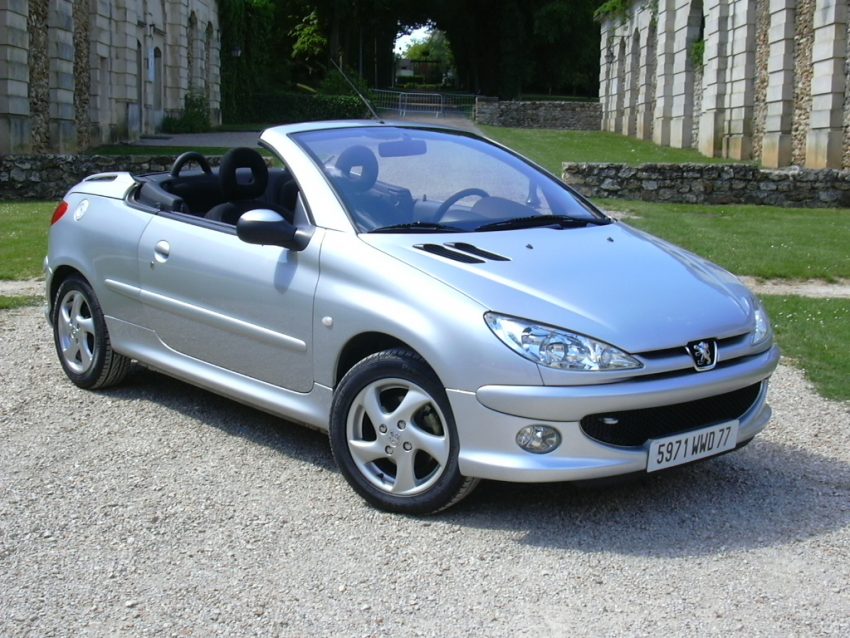
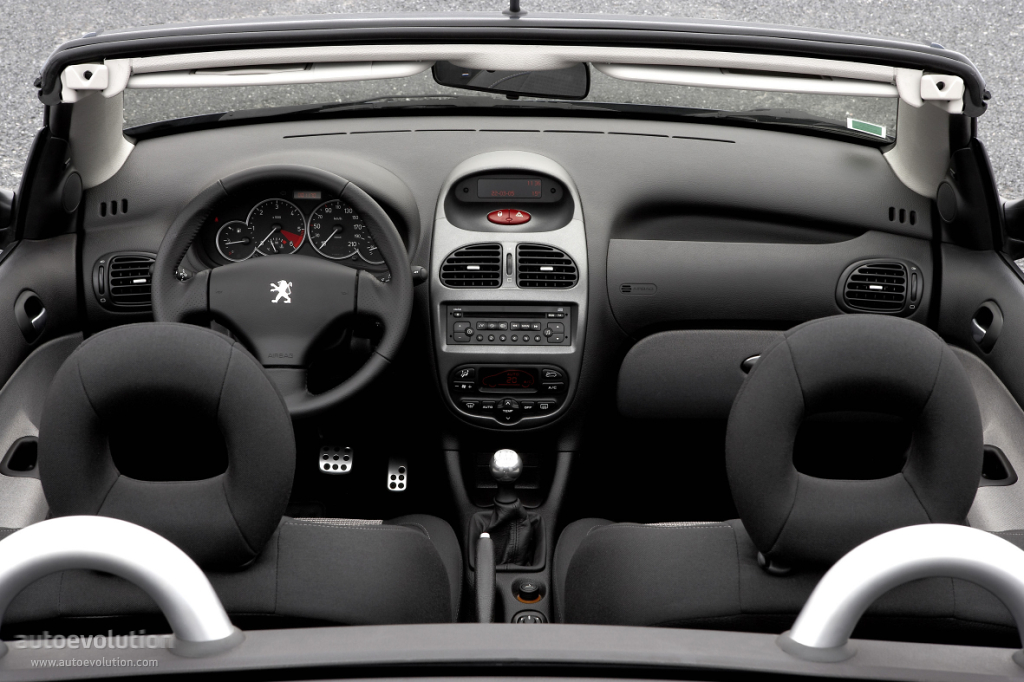
The “little lion” pioneered the modern tin-top: the first small-class convertible whose steel roof vanished electrically in about 20 seconds. Its 2 + 2 cabin came with 1.6 16 V (110 hp) or 2.0 16 V (136–138 hp) petrol engines, and more than 360 000 cars were built, making the 206 CC the best-selling coupé-cabriolet of the early 2000s. From 2005 a 1.6 HDi diesel (109 hp) joined the range; if you can live with diesel manners it offers excellent economy and is actually quicker than the 1.6 petrol.
Peugeot 207 CC (2007-2015)
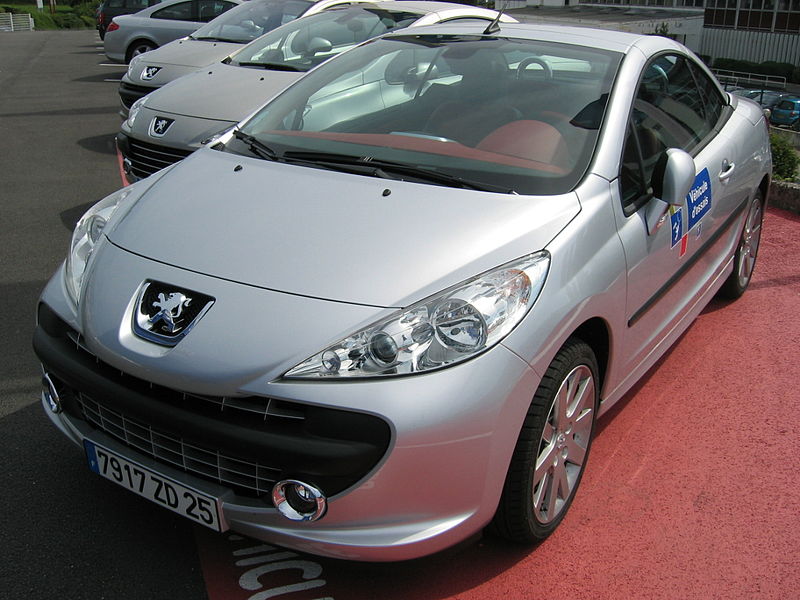
Its successor brought a more mature look, a better cabin. Most buyers chose petrol—either the naturally aspirated 1.6 VTi (120 hp) or the turbocharged 1.6 THP (150/156 hp) and diesel – the 1.6 HDi with 112 hp Launched in December 2006, the 207 CC kept an affordable convertible in Peugeot showrooms until production ended in 2015.
Peugeot 307 CC (2003-2008)
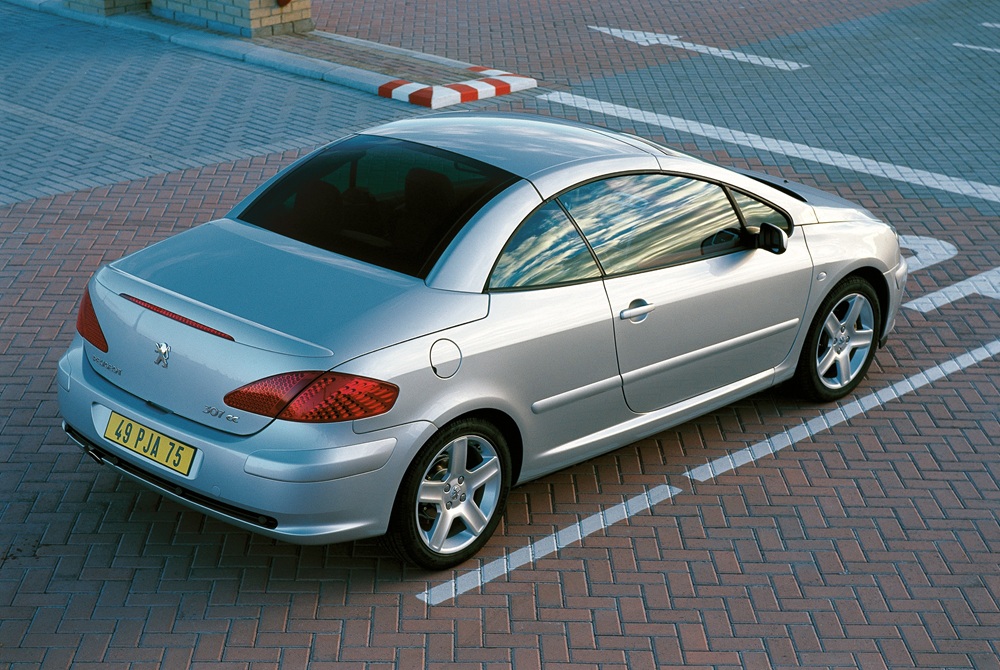
Moving up to the C-segment added genuinely usable—though still tight—rear seats. The metal roof folded in 25 seconds and engines included 2.0 16 V units with 138 or 177 hp plus a 2.0 HDi with 136 hp. A 2005 facelift sharpened the nose and updated the dashboard, making the 307 CC the first widely available four-seat CC in Europe.
Peugeot 308 CC (2008-2015)
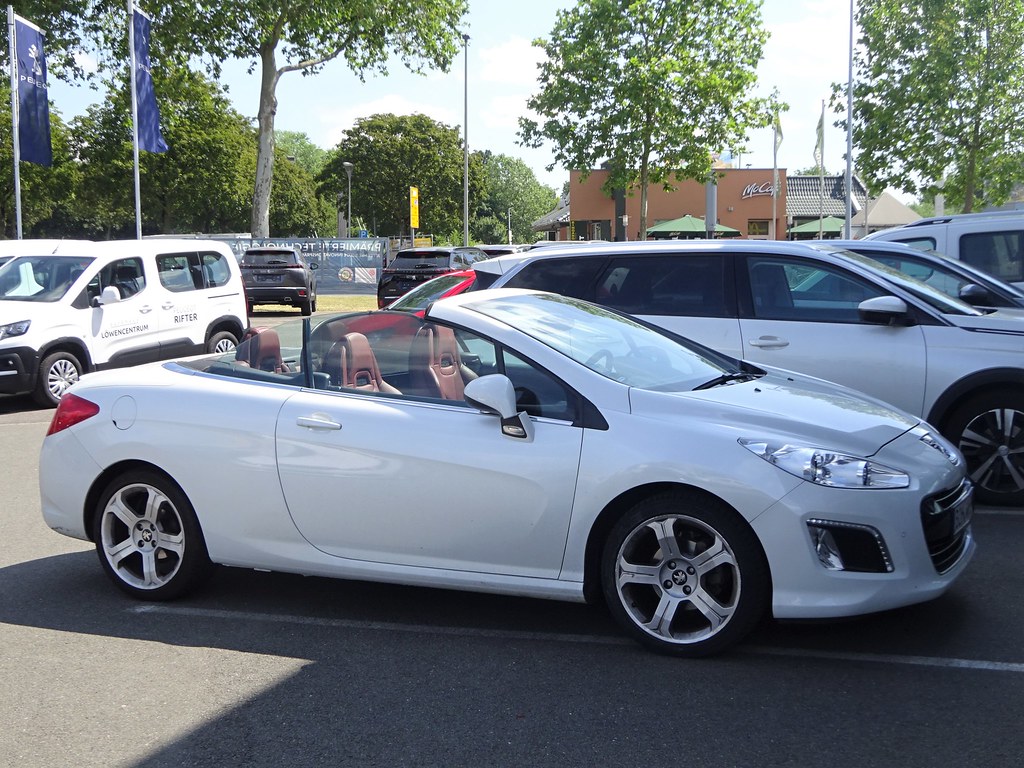
The final generation stiffened the bodyshell, introduced xenon/LED headlamps and added “Airwave” neck-level heating in the head-rests. After a 2011 update the range-topping 1.6 THP produced 200 hp, while the 2.0 HDi made 165 hp. Despite year-round usability—hardtop, heated seats, Airwave—sales of classic cabrios dwindled and Peugeot’s CC line ended in 2015, closing a 15-year chapter.
Buying a Peugeot CC – what and for how much?
Peugeot 206 CC
• Around €1 500 buys a high-mileage car with rust and a dead roof mechanism.
• €3 000–4 500 secures a well-cared-for 1.6 16 V.
• Low-mileage 2.0 16 V examples can exceed €5 000.
• Price depends on rust-free sills/floor and healthy roof hydraulics.
Peugeot 207 CC
• Most listings fall between €3 000 and €7 000.
• Limited-edition Roland Garros trims or strong 1.6 THP versions reach €8 000–9 000, especially under 100 000 km.
• Documentation of THP servicing, both keys and the wind-deflector add value.
Peugeot 307 CC
• Project cars or roof failures start at about €1 000.
• A sound 2.0 138 hp car with fresh TÜV and leather usually costs €2 500–4 500.
• Well-kept post-facelift models with under 150 000 km fetch €6 000–6 500.
• Check the rear-axle frame for rust, A/C tightness and presence of the boot-bay cover.
Peugeot 308 CC
• Prices start near €4 000 for very high-mileage, worn examples.
• Typical 1.6 VTi/THP or 2.0 HDi cars run at €6 000–10 000.
• Top Allure or Roland Garros versions with Airwave and mileage below 100 000 km can exceed €12 000, especially in southern Europe where rust is rarer.
What to inspect carefully
• Roof mechanism – slow travel, leaking hydraulic rams or sensor errors can cost €600–1 200 to fix.
• CAN-bus electrics – “Roof open/closed faulty” messages on 207/308 CC often signal moisture in the wiring.
• 1.6 THP engines – lively, but a timing-chain kit every 80–100 000 km is about €700.
• HDi diesels – the DPF clogs quickly in city use; choose one only for regular long journeys.
• Rust – on 206/307 CC look closely at sills, floorpan and rear-axle frame. Cars from southern Europe, where bodies stay corrosion-free, can save headaches now and later.
Why the CC still matters
Peugeot was the first to bring a folding metal roof to everyday cars. The 206 CC and 207 CC made open-air motoring affordable, while the 307 CC and 308 CC proved you could mix year-round practicality with beach-car character. With cross-overs now dominating showrooms, these CCs remain tempting used buys—ideal for spring road-trips and for anyone nostalgic for the golden age of coupé-cabriolets.
The 307 CC isn’t really my cup of tea, but the 308 CC—especially after the facelift—looks genuinely sharp to me. Meanwhile, the 206 CC remains one of the best entry-level convertibles out there; fit it with the diesel and it’s amazingly cheap to run for the price you pay.