
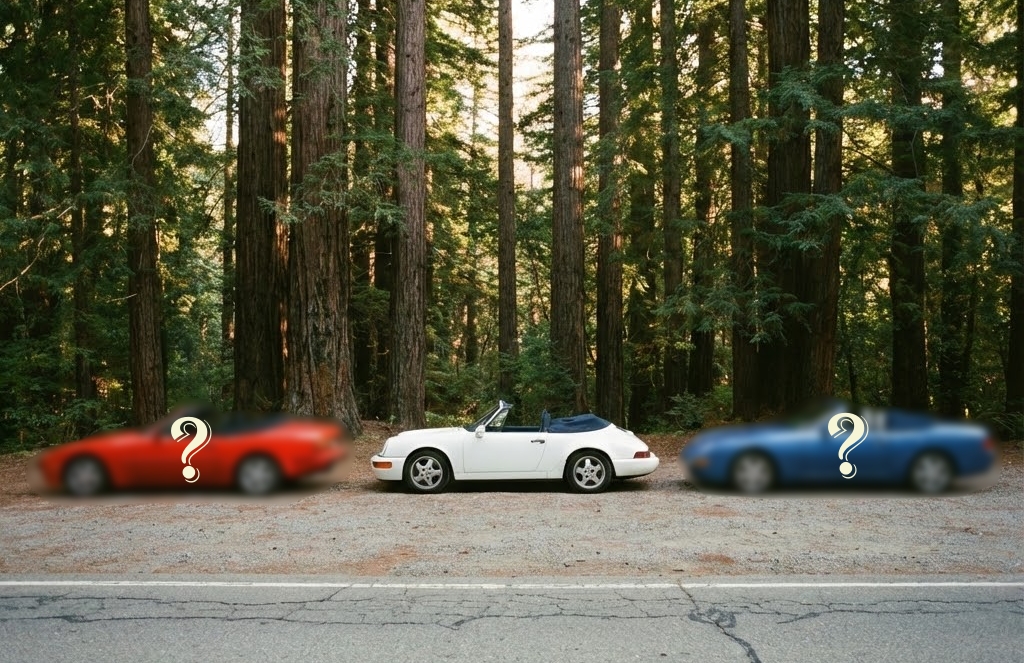
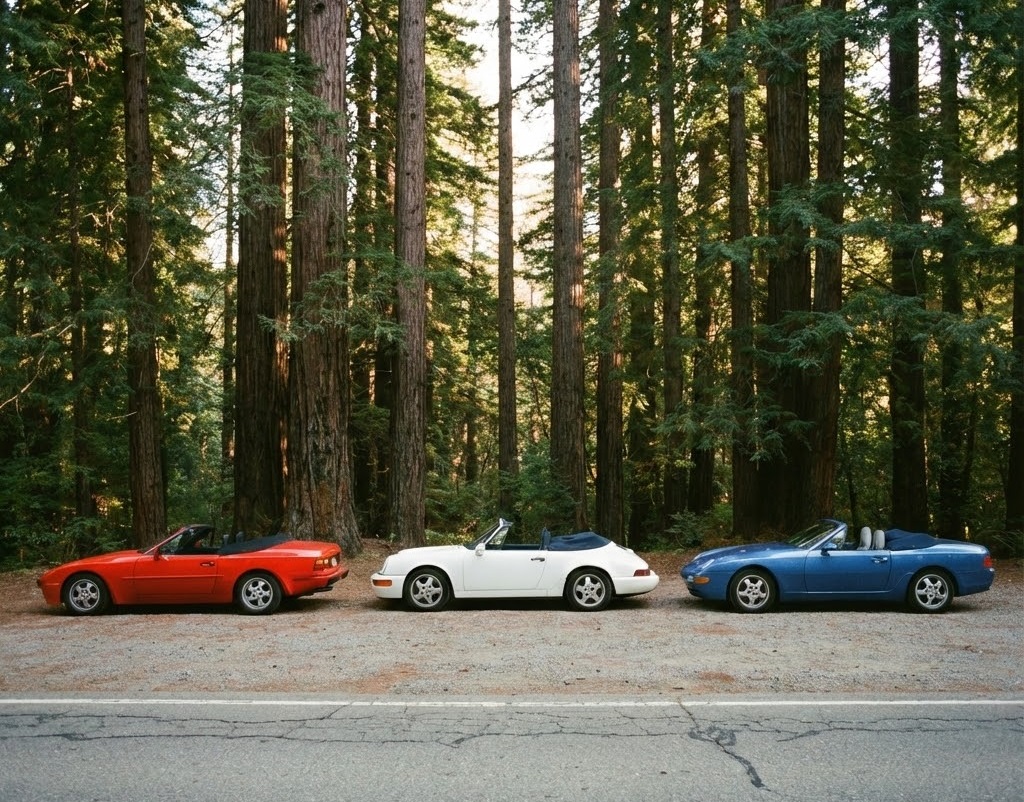
Many people still think in very simple terms: Porsche = 911, 911 = Porsche. As if the two were perfect synonyms (mostly for classics). Of course, today the brand also builds sedans and SUVs, but that is the modern era. If you look back, there is a chapter that is often overlooked, or even forgotten. The 924/944/968 line proved that the brand from Zuffenhausen could build thoroughbred front-engined sports cars, offering a real alternative to the iconic rear-engined model. These underrated classics are now gaining value, especially in cabrio form.
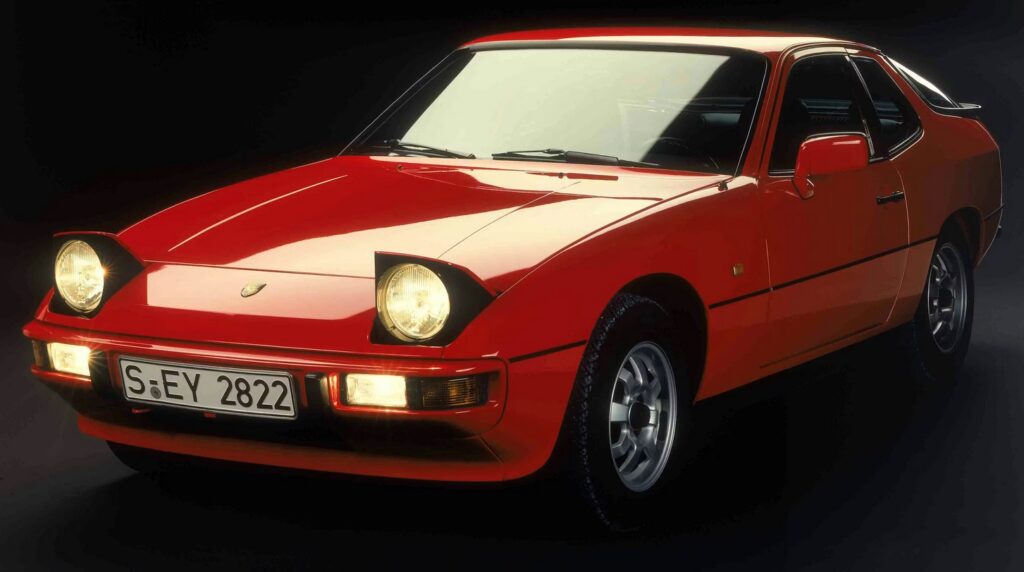
Porsche 924: the beginning of the line
The Porsche 924 debuted in 1976 as a more affordable alternative to the Porsche 911, replacing the 912E and 914. The project was born in cooperation with VW/Audi, but Porsche eventually took full control of production in Neckarsulm. It was offered as a coupé, with a 2.0-litre inline-four Audi engine producing 125 hp, a weight of around 1,080 kg (2,381 lbs) and a 48:52 weight distribution. In 1979 the Turbo arrived (up to 170 hp in Europe, 143–150 hp in the US), doing 0–100 km/h in about 7.9 seconds and reaching 220 km/h, a car that proved the 924 was a real Porsche, just cheaper and more accessible. The Germans were carefully testing the market with it, so they did not go too wild on power, and they deliberately did not offer a cabriolet version.
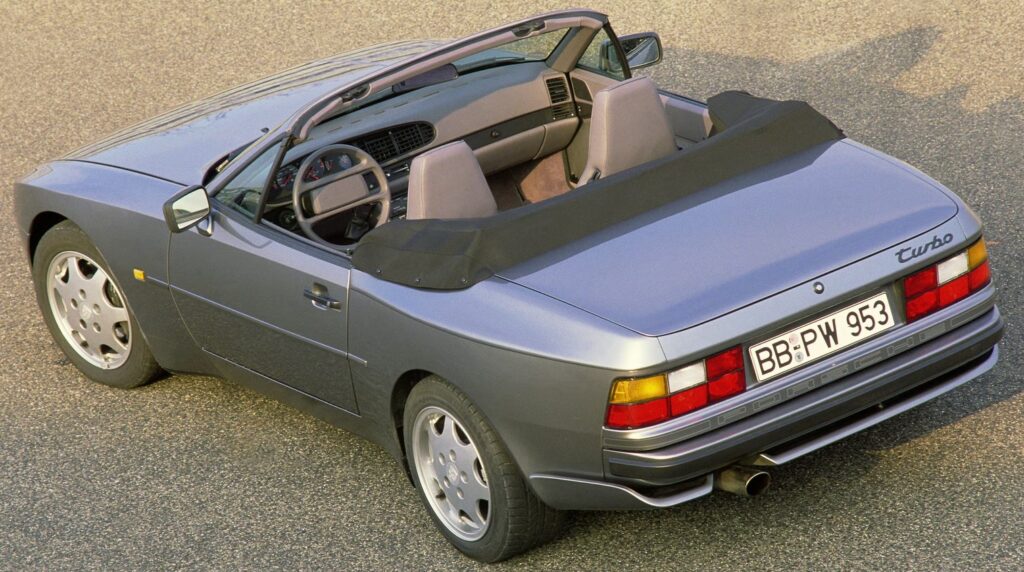
Porsche 944: the underrated classic`
The Porsche 944, successor to the 924, entered the market in 1982 with its own 2.5-litre inline-four (163 hp), offering an ideal 50:50 weight distribution thanks to a rear-mounted transaxle (a unit that combines the gearbox and the driven axle in one housing). Base models weighed around 1,180 kg (2,601 lbs), and the Cabriolet (introduced with later S2 and Turbo versions) went up to around 1,340 kg (2,954 lbs). Engine variants included the 944 (163 hp, 0–100 km/h in around 7.7 s), S (190–211 hp), the 3.0-litre S2 (211–245 hp, up to 260 km/h) and the Turbo (250 hp and more in RS form). The distinctive design and precise handling turned the 944 into a comfortable gran turismo with a genuinely sporty character.
Porsche 968: the last of the line
The Porsche 968 (1991–1995) was a thoroughly refined evolution of the 944, powered by a 3.0-litre four-cylinder (240 PS/177 kW, 305 Nm) and offered as a coupé or cabriolet, officially seen as the forerunner of the Boxster thanks to its compact proportions and open-roadster spirit. The cabrio weighed between 1,370 and 1,440 kg (3,020–3,175 lbs), with performance figures of 0–100 km/h in 6.5 seconds (manual) and a top speed of 252 km/h. Tiptronic versions added around 60 kg and slowed the sprint to about 7.8 seconds, but kept the excellent balance and aluminium-intensive construction. It was the last front-engined Porsche with a four-cylinder, combining elegance with genuine dynamic ability.
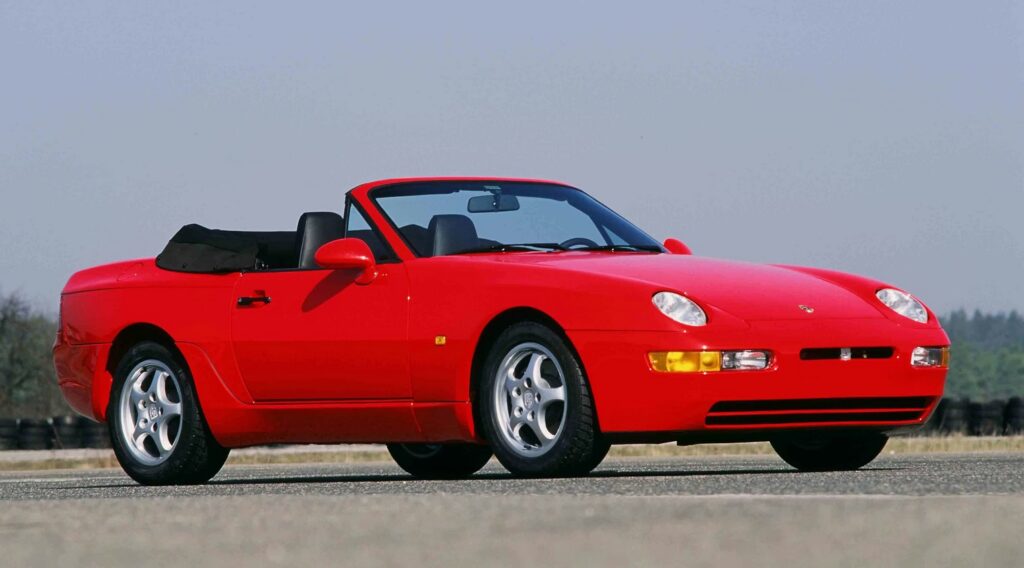
Investing in 944 and 968 cabriolets
Cabriolet versions of the 944 and 968 are steadily climbing in value as rare modern classics and are becoming one of the more interesting capital investments in the front-engined Porsche world. The Porsche 968 Cabriolet sits at a median of about €24,000–€28,000 on the current European market (2025), with top cars in exceptional condition or rare specifications (such as Club Sport or certain Tiptronic examples) fetching €38,000–€40,000.
The Porsche 944 Cabriolet, especially the S2 3.0L variant, holds its value very well thanks to low production numbers and growing interest among collectors. Well-kept examples usually fall in the €22,000–€31,000 range for cars with 120,000–160,000 km, while low-mileage cars (under 100,000 km) can reach €30,000–€35,000.
The price trend is clear: both 944 and 968 cabriolets are appreciating by roughly 5–8% per year, with the most stable growth seen in low-mileage cars in excellent mechanical and cosmetic condition. These models are a solid store of value for enthusiasts who actually want to drive their cars, an investment with real emotion attached.
Compared to the 911: while classic 911s can rise by 10–15% per year, 944/968 cabriolets, though appreciating more slowly, offer much better affordability (typically 50–70% cheaper) while still delivering a very similar driving experience and the full authenticity of the Porsche badge.
Cabriolet premium: open-top versions are typically 40–60% more expensive than coupés of the same age and mileage. A Porsche 944 S2 Cabriolet (1990, around 120k km) will usually cost in the €22,000–€31,000 bracket, while an S2 coupé of similar age is often listed at €18,000–€22,000.
Mileage effect: every extra 50,000 km tends to shave roughly €1,500–€3,000 off the price for cars with good service history.
Year and engine: S2/Turbo models from 1989–1991 are typically €5,000–€15,000 more expensive than base 2.5L cars. The 968 does not have such engine variety, it comes only with the 240 PS unit, which makes the market more transparent and easier to read.
Price trend: data from valuation and listing portals suggests that 944 S2 and 968 cabriolets have been rising by around 5–8% per year.
Porsche 944 Cabriolet
Porsche 968 Cabriolet (1991–1995):
- Mileage under 100,000 km: €26,500–€29,900
- Mileage 140,000–150,000 km: €24,500–€26,500
- Mileage over 200,000 km: €24,900–€39,000 (depending on condition)
Best value for money: a 944 S2 3.0L Cabriolet with 140,000–160,000 km at €22,000–€25,000 – a true driver’s car with low production numbers, great handling and very stable values.
Premium investment: a low-mileage 968 Cabriolet (< 100,000 km) at €26,000–€32,000 – the official Boxster precursor, rarer than the 944 and appreciating faster.
Caution: cars with more than 250,000 km on the clock can be tempting price-wise, but expect noticeably higher maintenance costs.
The Porsche 924/944/968 family is currently enjoying a renewed wave of interest. Prices are moving up, but not in a wild, speculative way, unlike many air-cooled 911s. This still gives investors and enthusiasts a chance to get into a proper, characterful Porsche on a sensible budget. The open question is whether this window will stay open for much longer, or whether we are just before a sharper price jump.
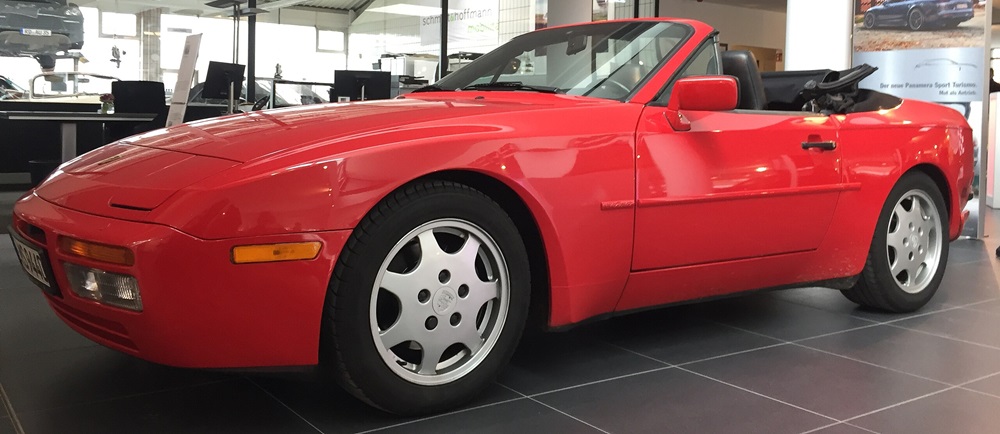
My impressions
These models remain hidden Porsche gems – especially in cabrio form. The 944 and 968 cabriolets combine open-top fun, superb balance and real investment potential, easily outclassing many modern youngtimers. They are not just cars, but pieces of Porsche history living in the shadow of the 911. Even though the 968 is quicker and more modern, it is the 944 that really steals my heart in this line-up. In certain angles the 968 reminds me of a 911, but the 944 feels like a truly original alternative to the main Porsche storyline. Together with the 986 it sits firmly on my bucket list. The 911s are, in my view, phenomenal – but, with all due respect (thank you Mr. Ferdinand – you can read about him here), also the obvious choice. The 944 and 968 are the opposite.
| Specification | Porsche 944 Cabriolet | Porsche 944 Turbo Cabriolet | Porsche 968 Cabriolet |
|---|---|---|---|
| Production Years | 1988-1991 | 1990-1991 | 1991-1995 |
| Power | 211 PS | 250 PS | 240 PS |
| Engine | 3.0L I4 16V | 2.5L Turbo I4 | 3.0L I4 16V |
| Weight | 1310-1410 kg (2888-3108 lbs) | 1340-1420 kg (2954-3131 lbs) | 1370-1440 kg (3020-3175 lbs) |
| 0-100 km/h | 6.9 s | 6.5 s | 6.5 s (manual) / 7.8 s (Tiptronic) |
| V-max | 240 km/h (149 mph) | 260 km/h | 252 km/h (manual) / 245 km/h (auto) |